 by
by The sensory materiality of manuscripts is a current trend, and South Asian scrolls fit within this trend. Scrolls illustrating the Bhagavad Purana and Devi Mahatmya, are particularly interesting in this respect, awakening all the senses. The colours are eye-popping, with rich hues and shimmering gold. What really catches the eye is how tiny the script is—the BNF Sanskrit 447, for instance, has 8,000 lines of text, with six lines packed into every centimeter!
The sense of touch is also activated by the delicate, crisp paper used in these scrolls. It is incredibly thin—only about 0.06 mm thick—was most likely made in Srinagar in Kashmir which was known for producing a super fine and lightweight paper. This thin paper makes it possible to include long texts without making the scroll too bulky, so it’s easier to transport. The BNF Sanskrit 447, for example, is almost 18 meters long! While scrolls aren’t the usual format for books in India, they were sometimes used for texts that were carried personally,


almost like a sacred amulet. In this case, the patron likely used their wealth to commission a beautiful work of devotion. The text is carefully copied in full, and the scroll is decorated with intricate gold and floral designs, ensuring both divine blessings and social prestige for the person who owns it.
Flowers are an important part of daily life and visual culture in India, and relate to the sense of smell. The brahmins and gods in BNF Sanskrit 447 are all drawn with unique features and shown sitting in profile, surrounded by blooming flowers. One part of the scroll even shows a beautiful bouquet painted in bright colors like purple, pink, red, yellow, and orange.
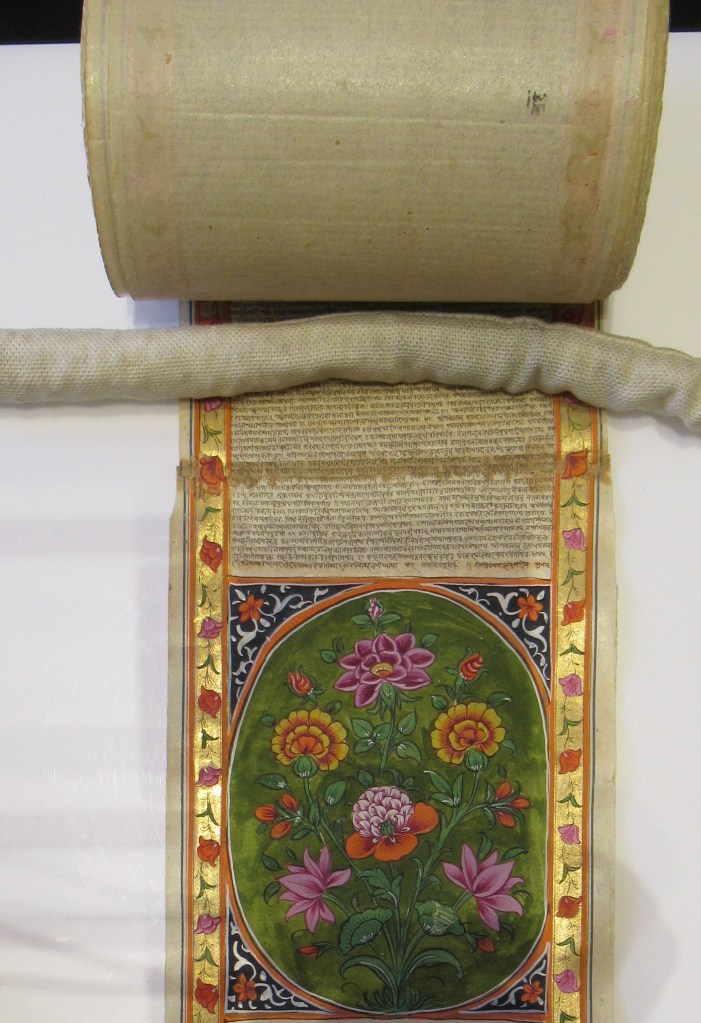
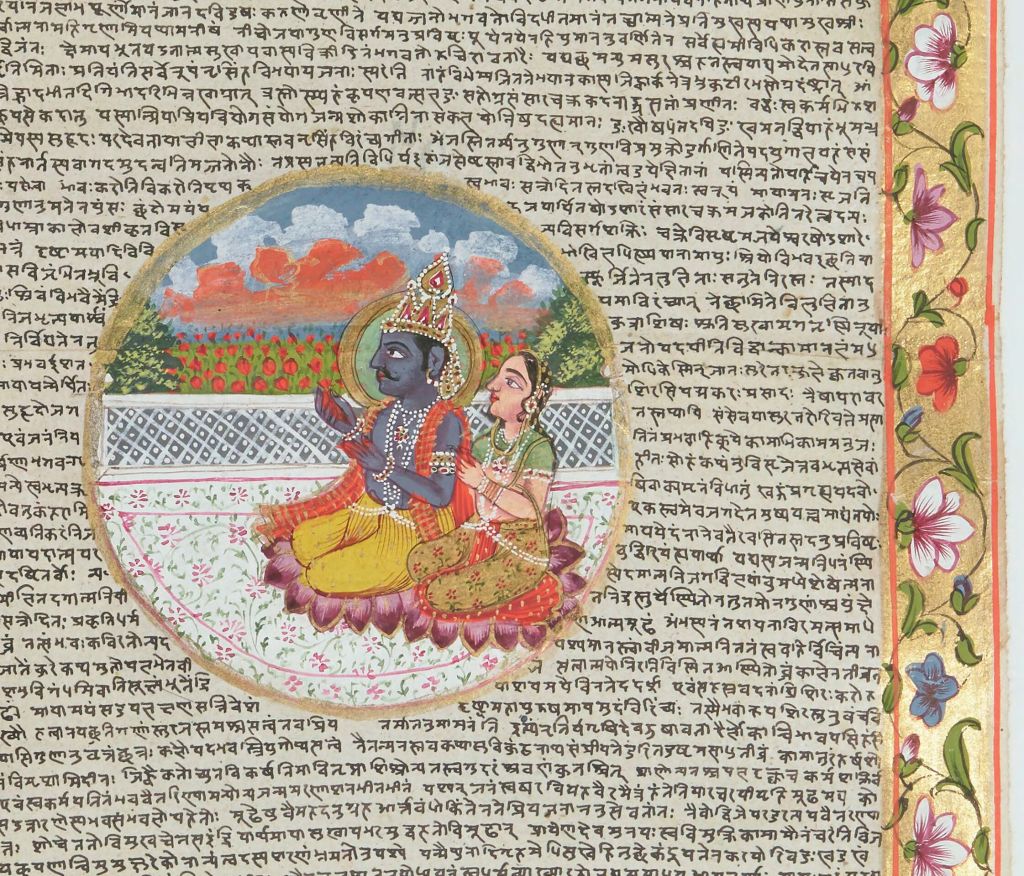
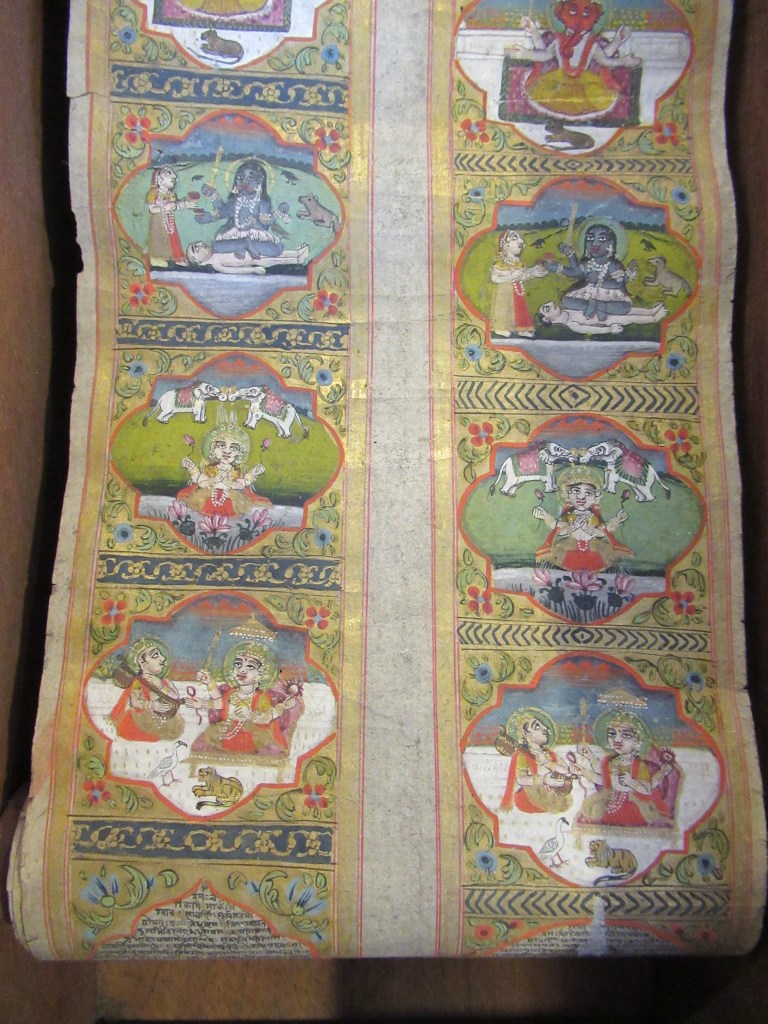
Not many studies have looked into how these scrolls were made, but J.P. Losty in his Art of the book in India (1982) has suggested that they were likely commissioned by wealthy Rajput patrons and created by Kashmiri artists. These scrolls are incredible feats of craftsmanship—some artists even went the extra mile by creating double scrolls, where both the text and illustrations appear twice side by side on the same scroll (like in the Devimahatmya scroll, Or. 18301, Leiden University library.
From a preservation perspective, the high-quality materials and the care taken by the owner have helped keep these scrolls in excellent condition, allowing us to enjoy them today.
Bibliothèque Nationale de France BNF Sanscrit 477 Bhagavad Purana , c. 1793 Rajasthan
BNF Sanscrit 479 Bhagavad Purana 18th century Rajasthan
Devimahatmya Or. 18301 Leiden University Library
 Amélie Conservation
Leave a comment