 by
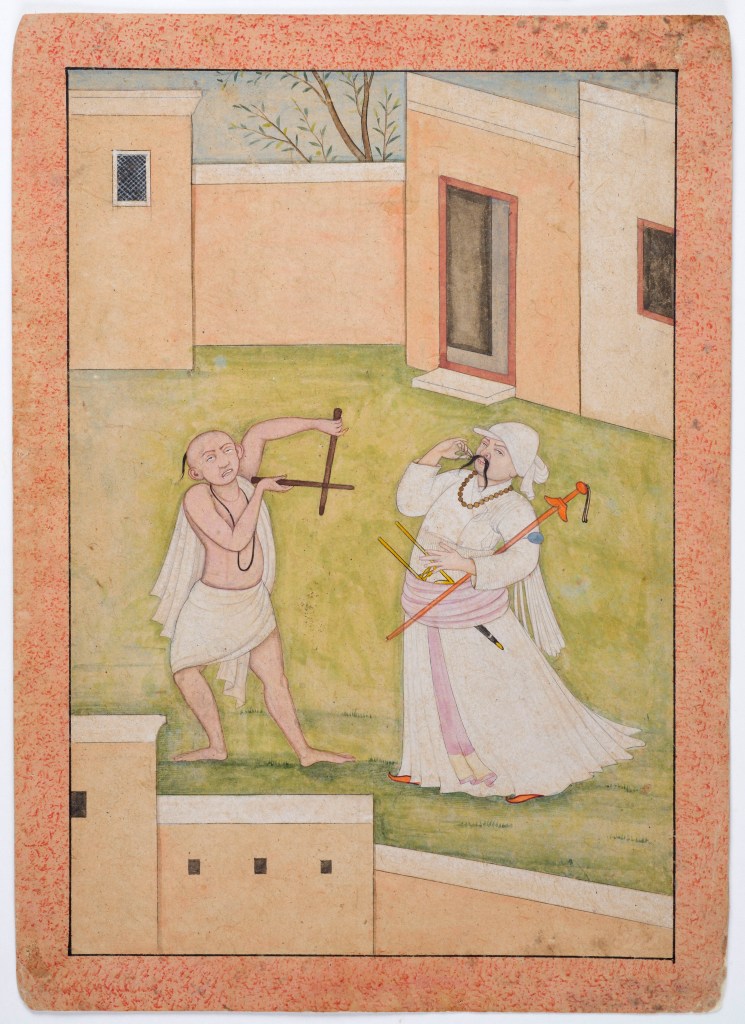
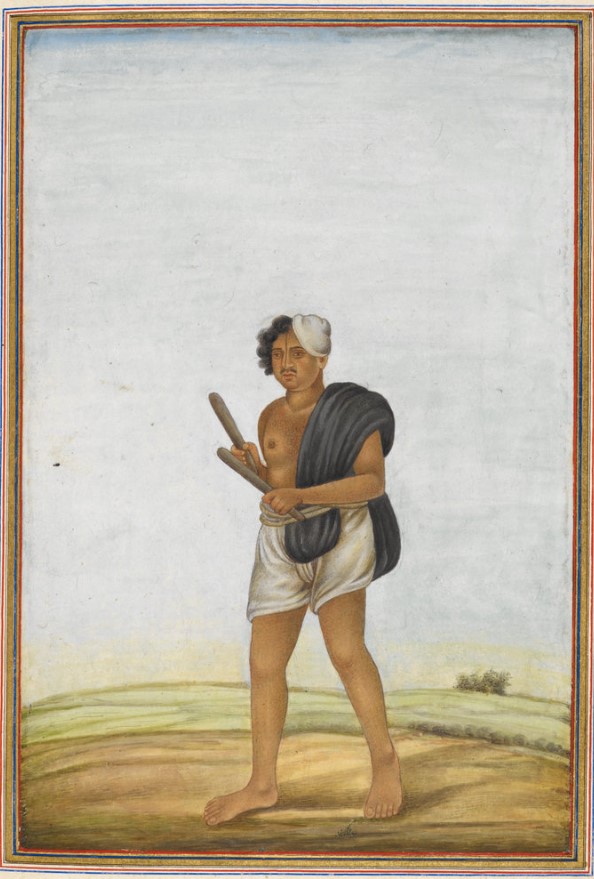
by Paper conservation often leads to the discovery of fascinating objects. Take this rather enigmatic depiction on this folio from the Wereldmuseum in Leiden (inventory number RV-3025-64). The image shows a man mocking a dandy. The colourful drawing has been attributed to Nikka de Guler (c.1745–1833), the second son of Nainsukh de Guler, by Eberhard Fischer who also identified the scene.
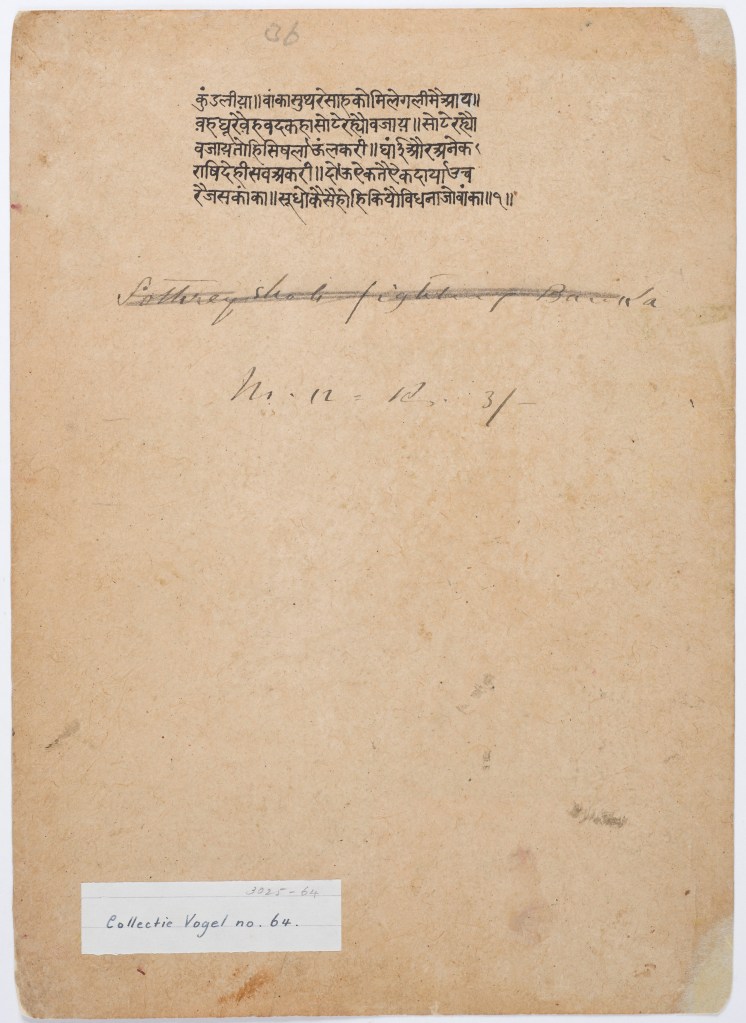
The verses on the reverse of the folio, written in the form of “kundaliya” in Braj script, translated by the late Professor BN Goswamy in 2021, shed light on this mysterious scene:
A dandy and a Suthra ran into each other in a lane. One of them stared at the other in angered arrogance, and the other countered that stare by striking and beating on his pair of sticks. ‘Shall I teach you a lesson using these sticks?’, he asked. The other one (the dandy) then spoke up and said ‘Do you want me to beat you up so much that your body will keep hurting forever?”. They were a match, one better than the other; no one yielding ground. You tell us now how this situation between the two could have been resolved?
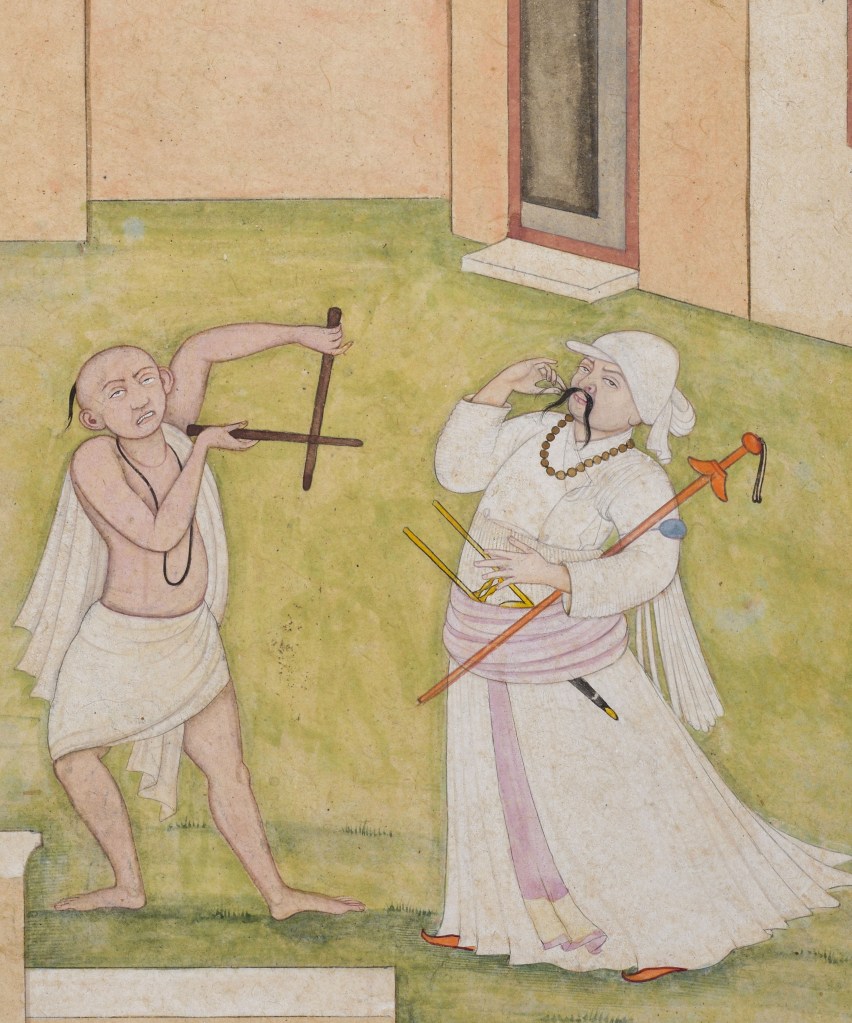
Therefore, the painting shows a theatrical artist in the guise of a Suthrasahi ascetic, equipped with clapping sticks, mocking a dandy in full regalia who is a caricature of an English military officer. Especially the latter is funny: His long mustache is from horse hair and fixed temporarily over his lip, his belly is probably stuffed with a cushion and besides a dagger, he holds a lacquered stick and sports a tropical helmet to which a turban cloth is attached — both insignia of a British official. The fine painted details, such as the realistic facial features, bear witness to the skill of the artist, who was undoubtedly a close relative of Nainsukh.
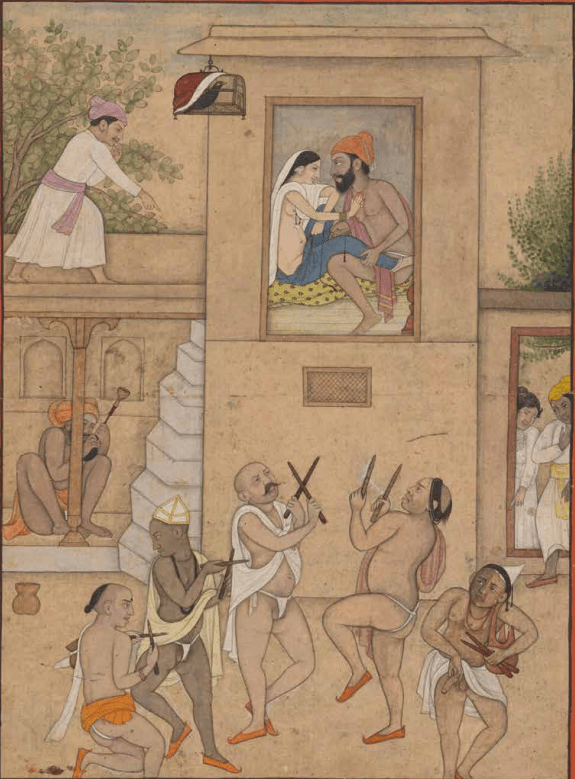
A similar subject on a painting entitled A scene outside a brothel was featured in Francesca Galloway’s catalogue Paintings for the Pahari Rajas (number 20).
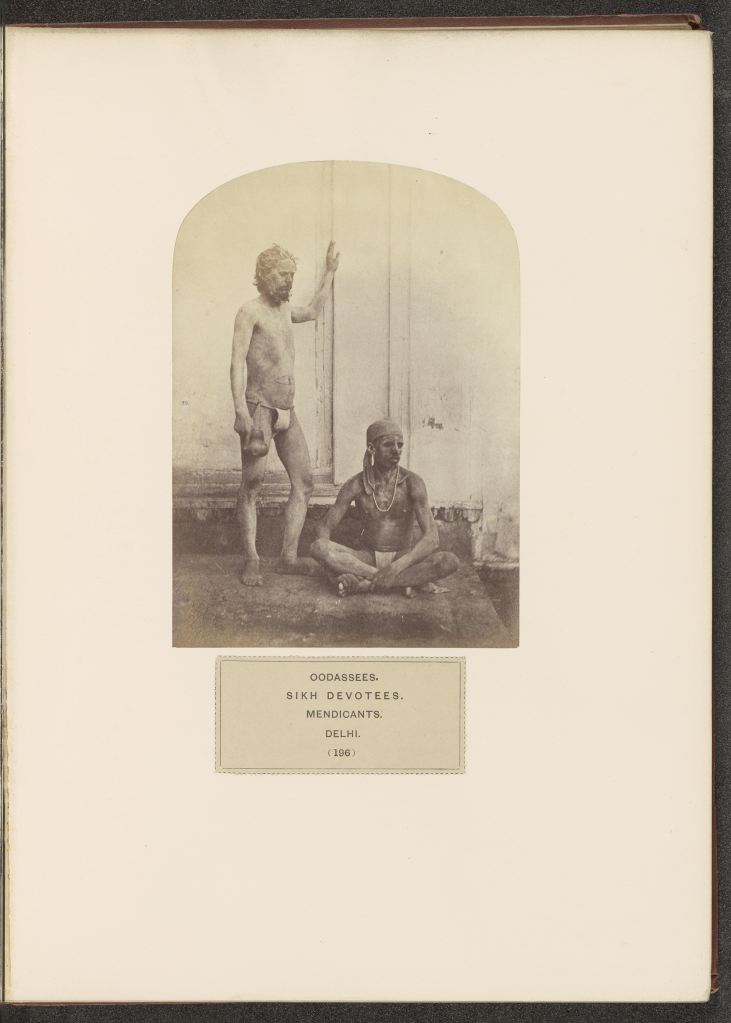
The Suthrashahis were followers of Suthra Shah, a devotee of the Sikh Guru Hargobind. They were a sub-sect of the Udasi sect. They are a religious sect of ascetic sadhus in northern India who follow a tradition known as Udasipanth in which religious practices border on a syncretism of Sikhism and Hinduism. A representation of a devotee was painted in the Tashrih al-aqvam, an account of origins and occupations of some of the sects, castes and tribes of India produced for Colonel James Skinner in 1825 (British Library, Add. 27255, f.432v).
A Portrait of two mendicant monks from the Udasi community of Sikhism in Delhi, India, photographed by Shepherds and Robertson,circa 1859 – 1869 gives us a glimpse of the members of this sect (Rijksmuseum RP-F-2001-7-1122D-23, The people of India : a series of photographic illustrations, with descriptive letterpress, of the races and tribes of Hindustan Volume four (RP-F-2001-7-1122D).
In terms of conservation, the drawing was in good condition and did not require any specific conservation treatment, apart from regular surface cleaning with a cosmetic sponge and some mending of the paper support. The exceptional condition of the work is the result of the incredible skill and materials used by the Pahari masters, particularly those of the first generation after Nainsukh, who mastered drawing and painting techniques to perfection.
 Amélie Conservation
Leave a comment